© 2026 AnChain.AI. All Rights Reserved | Privacy Policy



A convincing recruiter. A coding assignment. Access to a work computer.
Binance’s preliminary findings describe a months-long campaign that connected social engineering, malicious developer software, and compromised internal infrastructure to wallet-signing access. Its November 3 update reported approximately $6.34 billion in affected assets and $2.85 billion frozen or intercepted. www.binance.bh
The lesson for cryptocurrency teams: protecting customer assets requires securing every path from an employee’s laptop to transaction authorization.
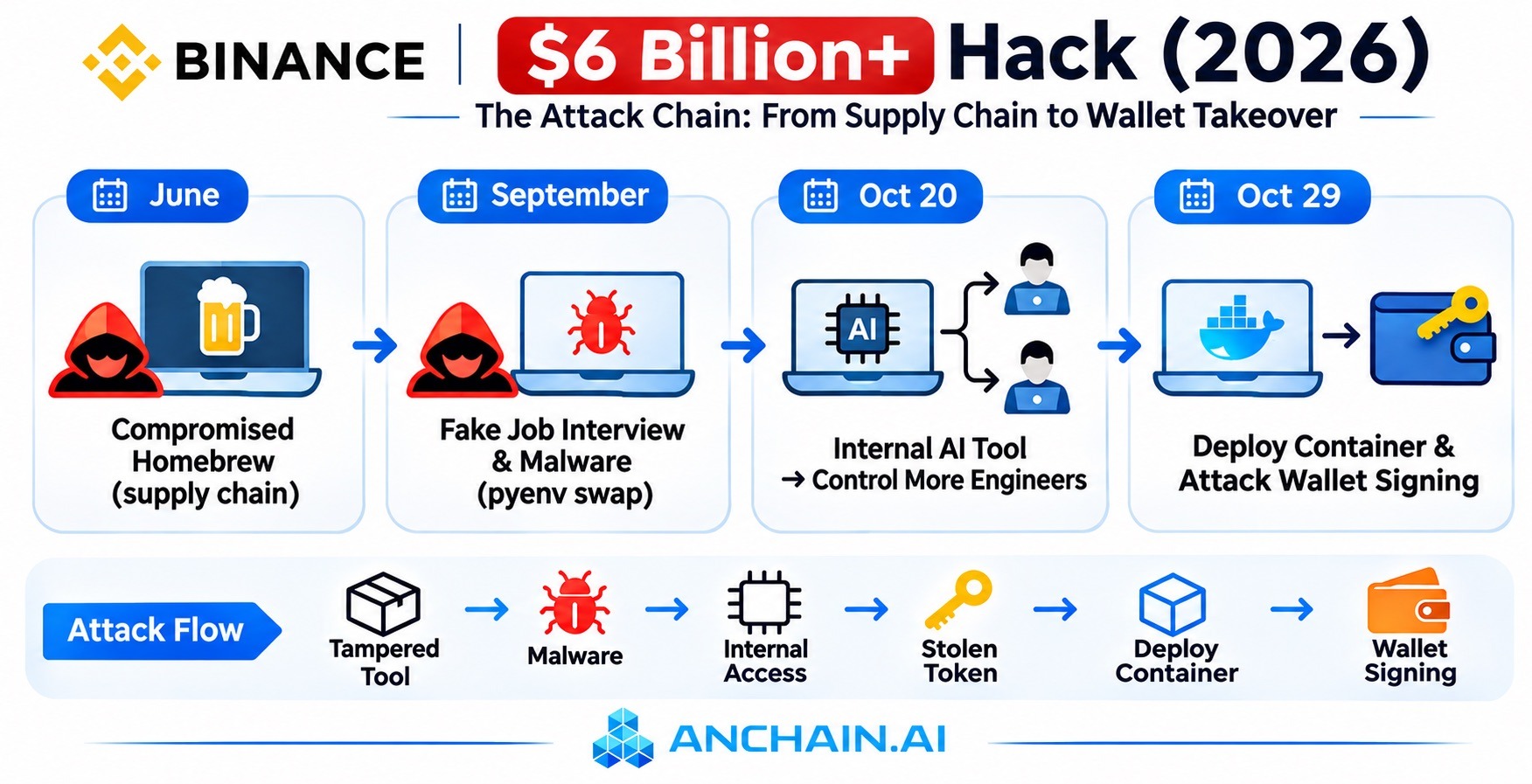
The illustration summarizes Binance’s preliminary account. “Compromised Homebrew” refers to a tampered installer downloaded by an engineer; it does not establish that the official Homebrew project was compromised.
The disclosed attack targeted the people, tools, and infrastructure controlling authorization. It did not require breaking blockchain cryptography. Abuse of internal AI tooling also does not establish that autonomous AI agents executed the attack.
AnChain.AI previously investigated a job-interview scam involving more than $1 million in stolen cryptocurrency. Staged recruitment and malicious interview software preceded theft involving USDT and USDC across Ethereum and Arbitrum.
The common failure point is professional trust becoming permission to execute unfamiliar software.
Our Binance EIP-7702 investigation explains the subsequent authorization abuse. Just 204 seconds separated installation of the malicious delegation on Binance14 from the asset sweep. Delegated code executed with the wallet’s permissions. www.anchain.ai
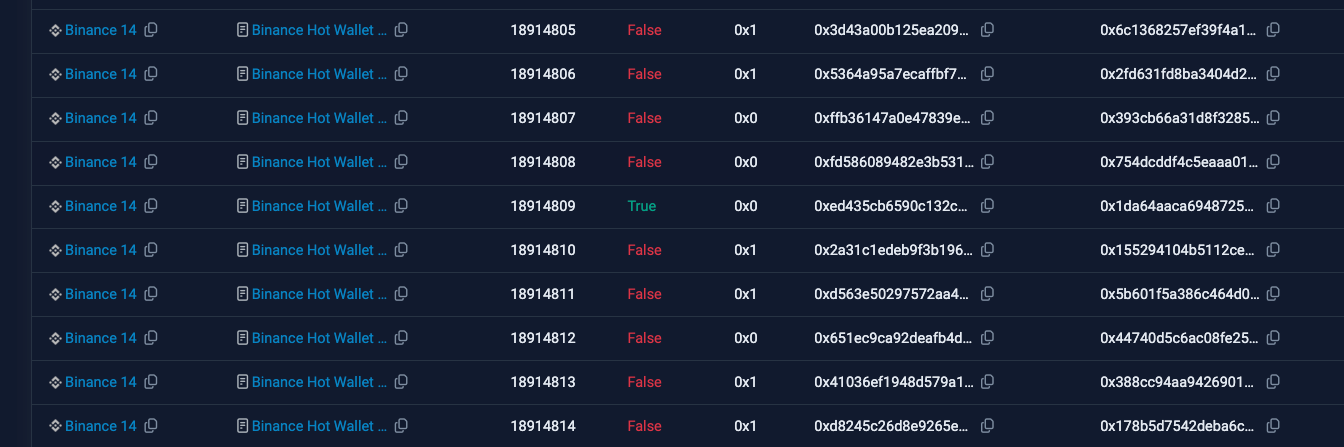
Example: 20:20:59 — Binance 14 delegated: authorization transaction.
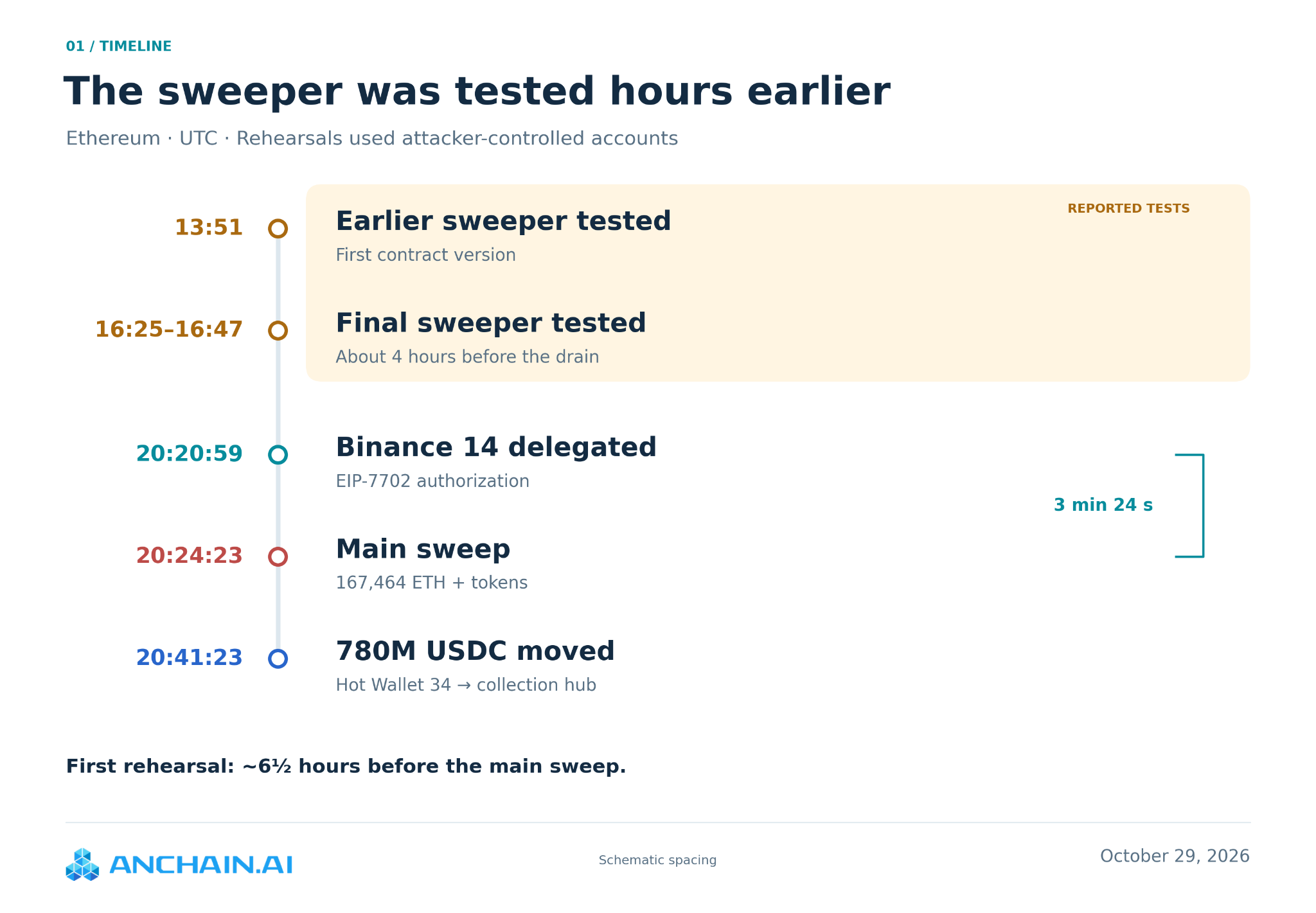
Our Binance tracing investigation examined 122 transactions across 10 blockchains. Tether and Circle froze approximately $2 billion in stablecoins at the collector address within 41 minutes of the Ethereum sweep—demonstrating the value of rapid, coordinated response. www.anchain.ai
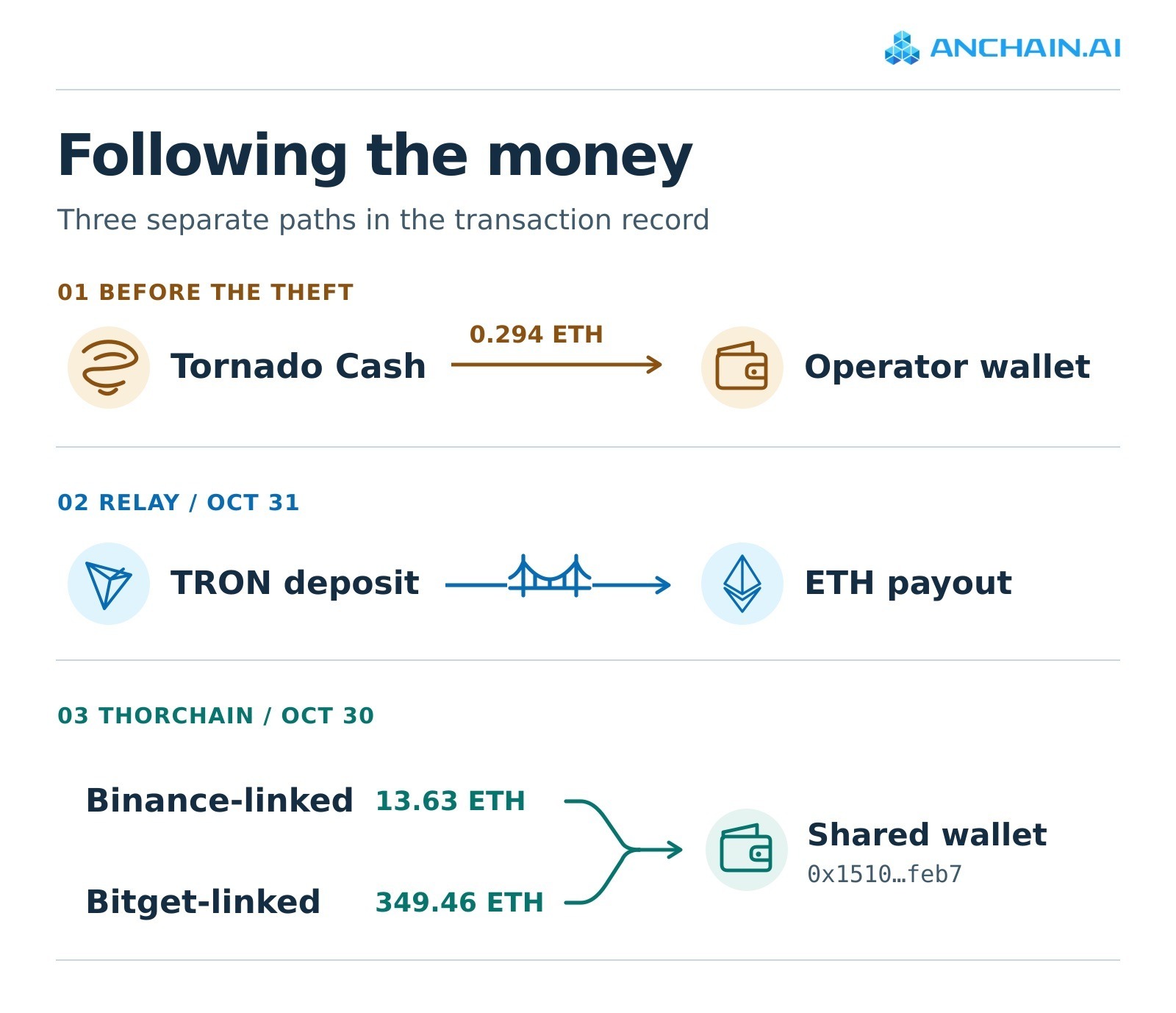
AnChain.AI Crypto Tracing: Each row follows a separate trail. The THORChain amounts are totals for multiple payouts to one Ethereum address.
AnChain.AI’s blockchain forensics service connects technical investigation with actionable incident-response evidence.
Our investigators trace funds across wallets, bridges, and exchanges; examine smart-contract execution; identify potential cash-out points; and prepare evidence for compliance teams, counsel, and law enforcement. www.anchain.ai
AI agents accelerate tracing and evidence organization, while experienced investigators validate conclusions. The priority is shortening the time between detecting theft and delivering evidence that supports intervention.
Disclaimer: For technical education only, not legal or financial advice. Data and findings may be incomplete or inaccurate. Consult qualified blockchain forensics professionals and appropriate advisers before taking legal or financial action. Recovery is not guaranteed.
© 2026 AnChain.AI. All Rights Reserved | Privacy Policy