© 2026 AnChain.AI. All Rights Reserved | Privacy Policy


Real-world asset (RWA) tokenization could unlock $16 trillion by 2030. The math is simple: traditional assets like real estate, bonds, and commodities gain 24/7 tradability, fractional ownership, and programmable settlement through blockchain infrastructure.
Institutions see the value. Tokenized government bonds create new collateral options for on-chain lending. Private credit funds can tap retail liquidity pools. Cross-border transactions that take days settle in minutes.
But there's a problem: DeFi's compliance infrastructure wasn't built for institutional capital.
Banks, asset managers, and funds operate under strict regulatory frameworks. They need:
We've spent years building compliance and security tools specifically for institutions entering crypto markets. Our solutions are already protecting over $8 billion in tokenized assets.
Core Technology: AnChain Data MCP (Model Context Protocol)
Our MCP server is the data engine that powers institutional-grade blockchain compliance:
Risk Assessment Capabilities:
Real-Time Compliance Screening:
AI-Powered Investigation Tools:
To understand why advanced compliance tools are critical, let's examine a real RWA token: Ondo Finance's USDY (US Dollar Yield).
Address Analyzed: 0x96F6eF951840721AdBF46Ac996b59E0235CB985C
Protocol: Ethereum (ETH)
Asset Type: Tokenized US Treasury-backed stablecoin
Ondo Finance's USDY represents tokenized exposure to short-term US Treasuries and bank demand deposits, offering institutional-grade yield while maintaining blockchain composability.
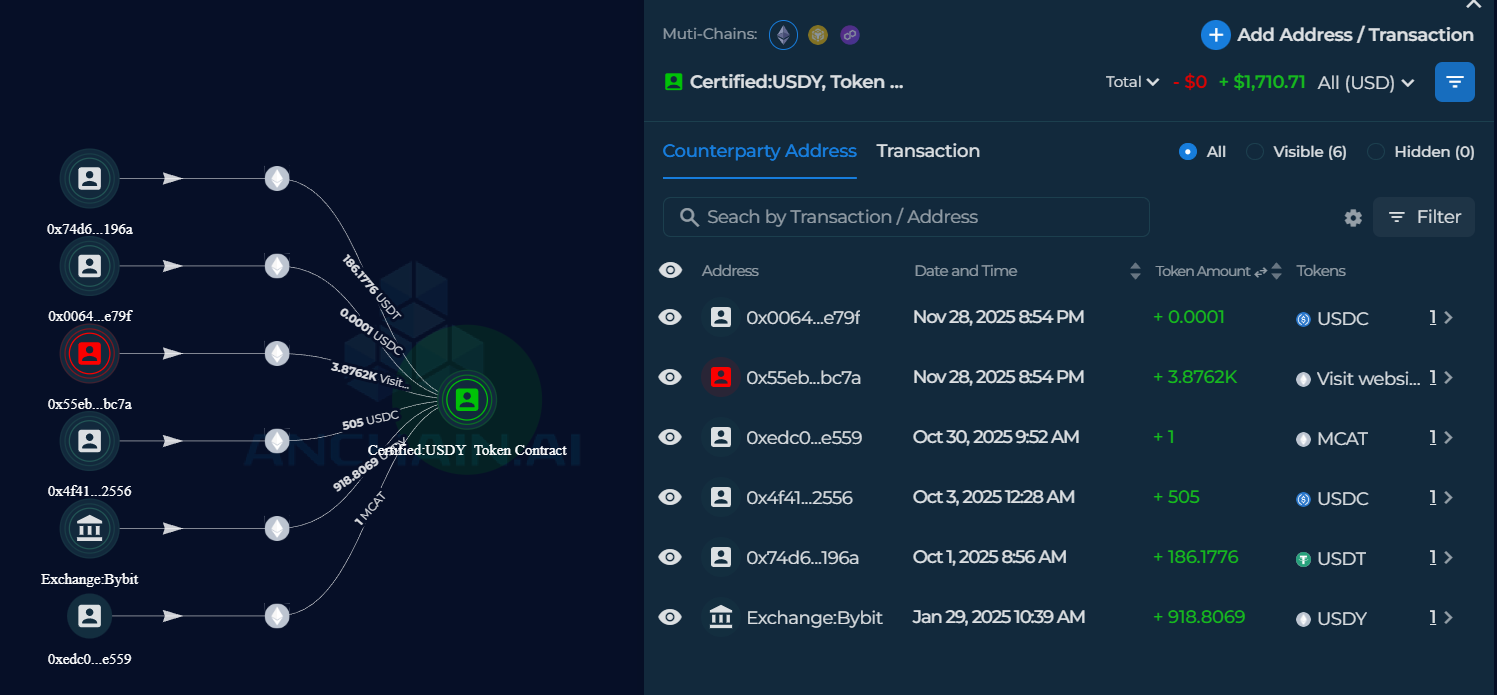
View the graph on our platform: https://ciso.anchainai.com/s/5shwpgWDWbV
The visualization above shows AnChain.AI's CISO platform analyzing the USDY token contract's transaction network. Here's what compliance teams can instantly identify:
Central Node (Green): The Certified:USDY Token Contract serves as the hub, processing multiple inbound and outbound transactions across various counterparties.
Connected Entities identified in this network:
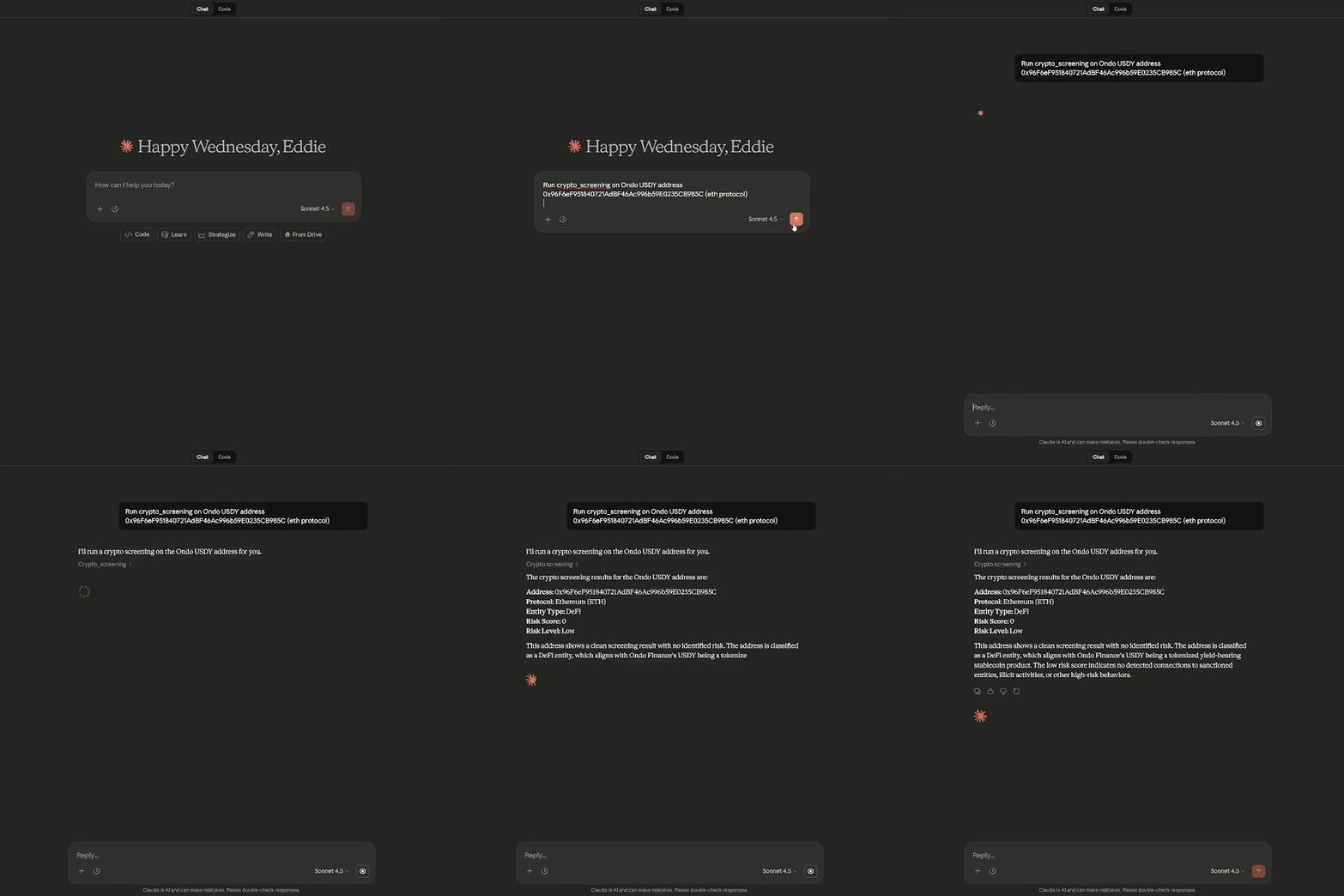
Without automated graph analysis, answering these questions would require days of manual investigation. With AnChain.AI's tools, it happens in seconds.
RWA adoption faces three remaining challenges where we're actively working with partners:
Our compliance layer solves the security and monitoring requirements, but lasting institutional adoption requires progress on these fronts too.
Visit our previous blog on RWA https://www.anchain.ai/blog/real-world-asset-rwa-coins .
Schedule a demo to see how AnChain.AI handles real transaction scenarios, or explore our case studies showing exactly how institutions are using our tools to enter RWA markets safely.
© 2026 AnChain.AI. All Rights Reserved | Privacy Policy