© 2026 AnChain.AI. All Rights Reserved | Privacy Policy



In October 2017, Frank Richard Ahlgren III, from Texas, sold approximately 640 BTC for $3.7 million and used the proceeds to buy a home in Park City, Utah. The sale was visible. The tax problem was hidden in the cost basis.
According to the U.S. Department of Justice, Ahlgren gave his accountant a false gains-and-losses summary and claimed purchase prices higher than Bitcoin had ever traded before the sale. He also failed to report more than $650,000 of Bitcoin sales in 2018 and 2019 while moving funds through multiple wallets, peer-to-peer cash trades, and mixers. He was sentenced to two years in prison and ordered to pay $1,095,031 in restitution. DOJ called it the first criminal tax prosecution centered solely on cryptocurrency. Source: U.S. Department of Justice
Routine crypto filing may be simple when a regulated exchange provides complete records. Crypto tax forensics begins when records are missing, wallet ownership is disputed, smart contracts obscure the economic action, or the result must withstand an audit or court challenge.
Ahlgren bought approximately 1,366 BTC through Coinbase in 2015, when Bitcoin’s highest reported price was $495.56. Most of the 640 BTC sold in 2017 came from those holdings, yet his return substantially inflated their basis.
A defensible reconstruction links:
Acquisition record → taxpayer-controlled wallet → internal transfers → disposition → proceeds → Form 8949 (“Sales and Other Dispositions of Capital Assets”)
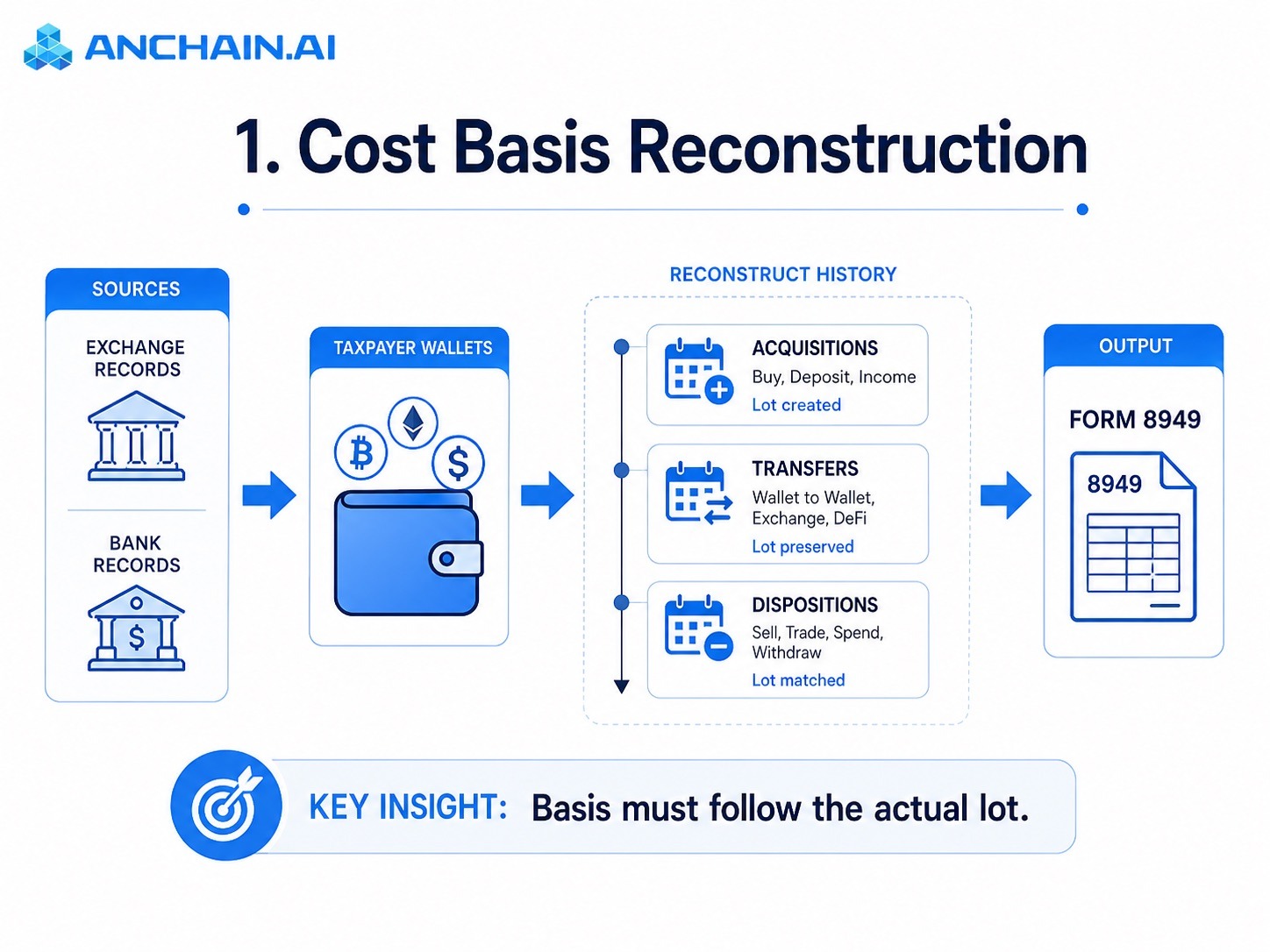
The workflow reconciles exchange orders, bank records, UTXOs or token flows, historical prices, fees, and tax lots. This is now especially important because federal basis identification applies wallet-by-wallet or account-by-account for acquisitions and dispositions from January 1, 2025. Specific identification requires contemporaneous records; otherwise, default ordering rules may apply. Source: IRS Revenue Procedure 2024-28
A transfer between a taxpayer’s own wallets is generally non-taxable, but crypto used to pay the network fee may itself be disposed of. Misclassifying an internal transfer can create phantom proceeds and break basis continuity. Source: IRS Digital Asset FAQs, Q81 and Q97
One Ethereum transaction may emit many token transfers without creating the same number of taxpayer-level tax events.
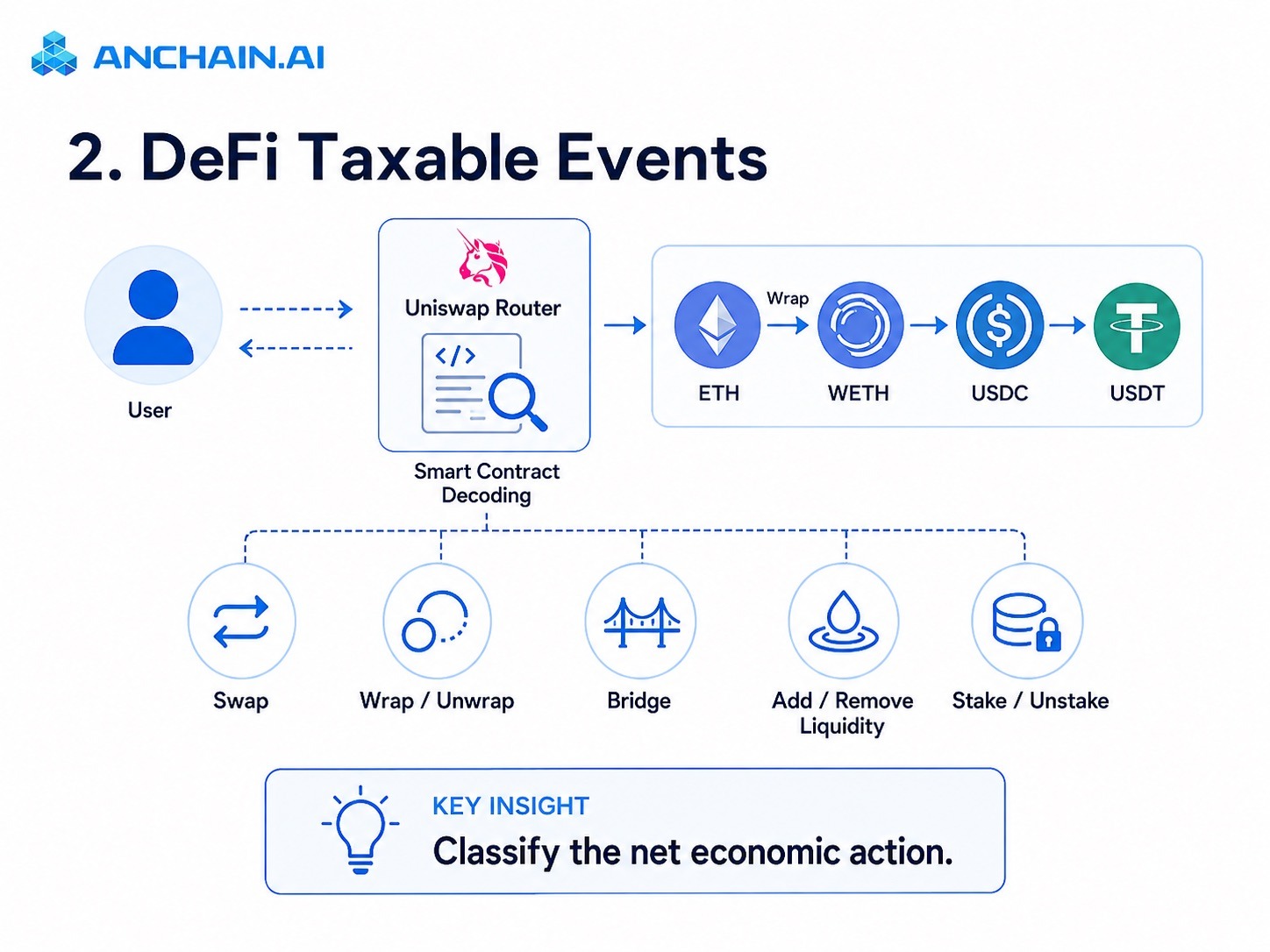
Consider Ethereum transaction 0x35bae2…30b8. On March 18, 2023, the Uniswap Universal Router routed approximately 21.7944 WETH through a USDC pool before the user received USDT. The transaction contained wrapping, swaps, intermediate ERC-20 transfers, and gas—but represented one net economic path.
Transaction hash:
0x35bae2ead0c03fc22ae5658a7994ca66e0113d6fee1fe375a638695ac2ea30b8
Uniswap router: 0xEf1c6E67703c7BD7107eed8303Fbe6EC2554BF6B
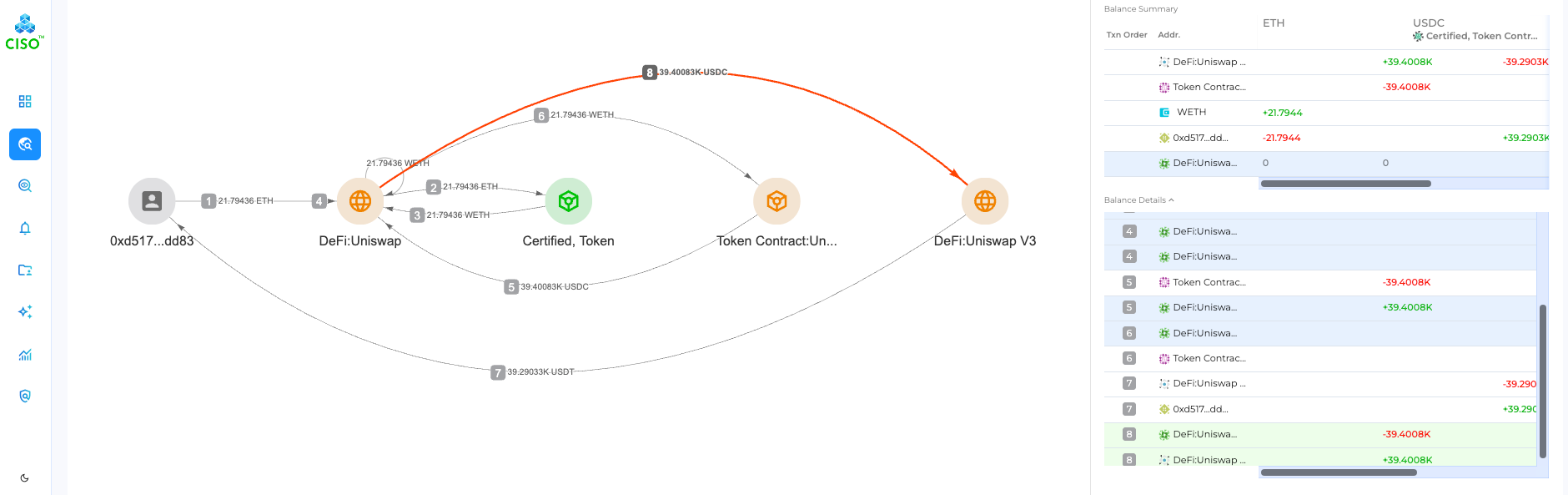
AnChain.AI platform uniquely decodes complex DeFi smart contract activity at the internal-transaction level. The visualization below reconstructs the complete flow of this DeFi swap—critical evidence for identifying the underlying economic activity and potential taxable events. View this complex DeFi transaction graph on our platform.
A modern blockchain forensic engine must decode DeFi smart contract calldata, internal calls, event logs, router and pool identities, net wallet balance changes, and fees. It should not report every router-generated WETH or USDC movement as a separate taxpayer disposition. Wrapping, bridging, liquidity deposits, lending receipts, and liquid-staking tokens still require facts-and-circumstances tax analysis.
The blockchain establishes execution; the tax professional determines characterization.
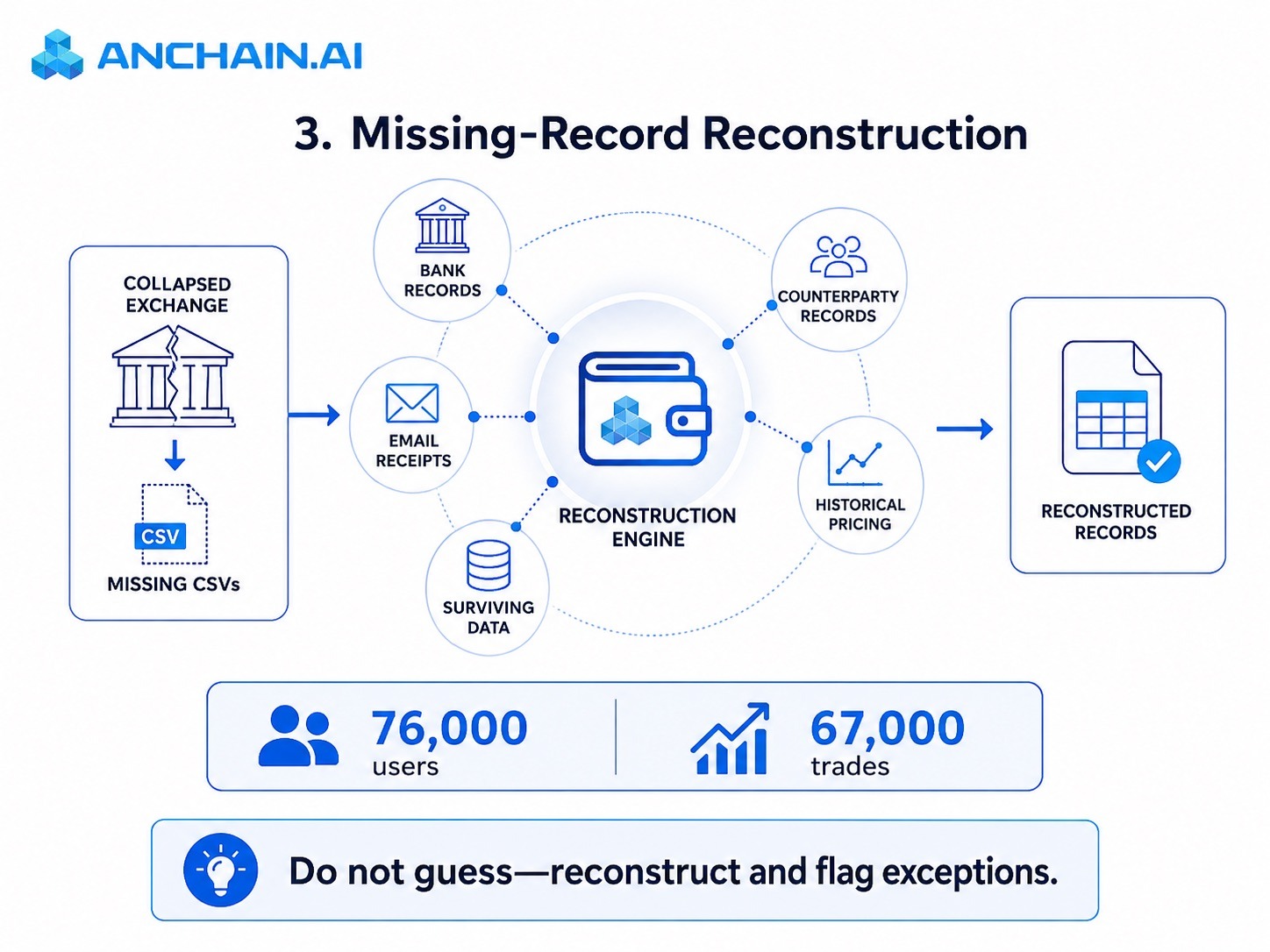
QuadrigaCX shows the boundary between public blockchain evidence and private accounting data. The Ontario Securities Commission reported that more than 76,000 clients were owed approximately C$215 million when the exchange collapsed. Investigators found deficient records, commingled assets, and transfers to accounts controlled by its founder. Source: Ontario Securities Commission
One public anchor is Bitcoin address 1MhgmGaHwLAvvKVyFvy6zy9pRQFXaxwE9M. Transaction 6bc41d19…5525c spent approximately 185.95380698 BTC from that address on April 2, 2018.
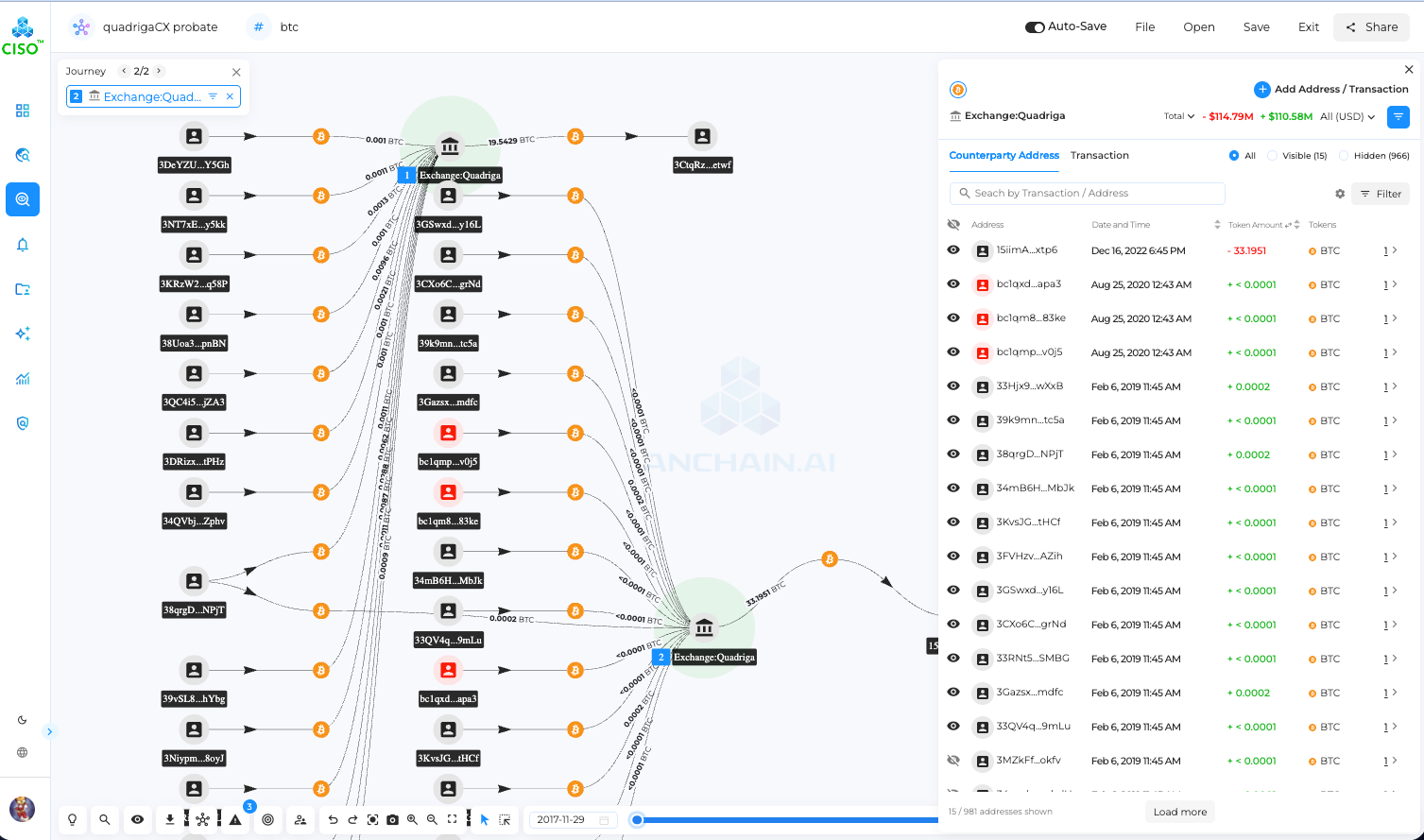
View the live crypto graph: https://ciso.anchainai.com/s/5JE0jZEzxkr
Reconstruction combines known addresses, deposit-and-withdrawal matching, surviving databases, emails, bank wires, counterparty exchange records, historical prices, and confidence-scored exceptions. Blockchain data can prove deposits and withdrawals. It cannot recreate trades executed inside a private order book. Unresolved trades must remain exceptions—not invented entries.
In the Silk Road forfeiture litigation, the government identified Bitcoin address 1HQ3Go3ggs8pFnXuHVHRytPCq5fGG8Hbhx. Its complaint traced 69,471.082201 BTC into that address in 2013; transaction 3f036ff8…ba9fd later moved approximately 69,369 BTC when the United States took custody in November 2020. Source: DOJ forfeiture complaint
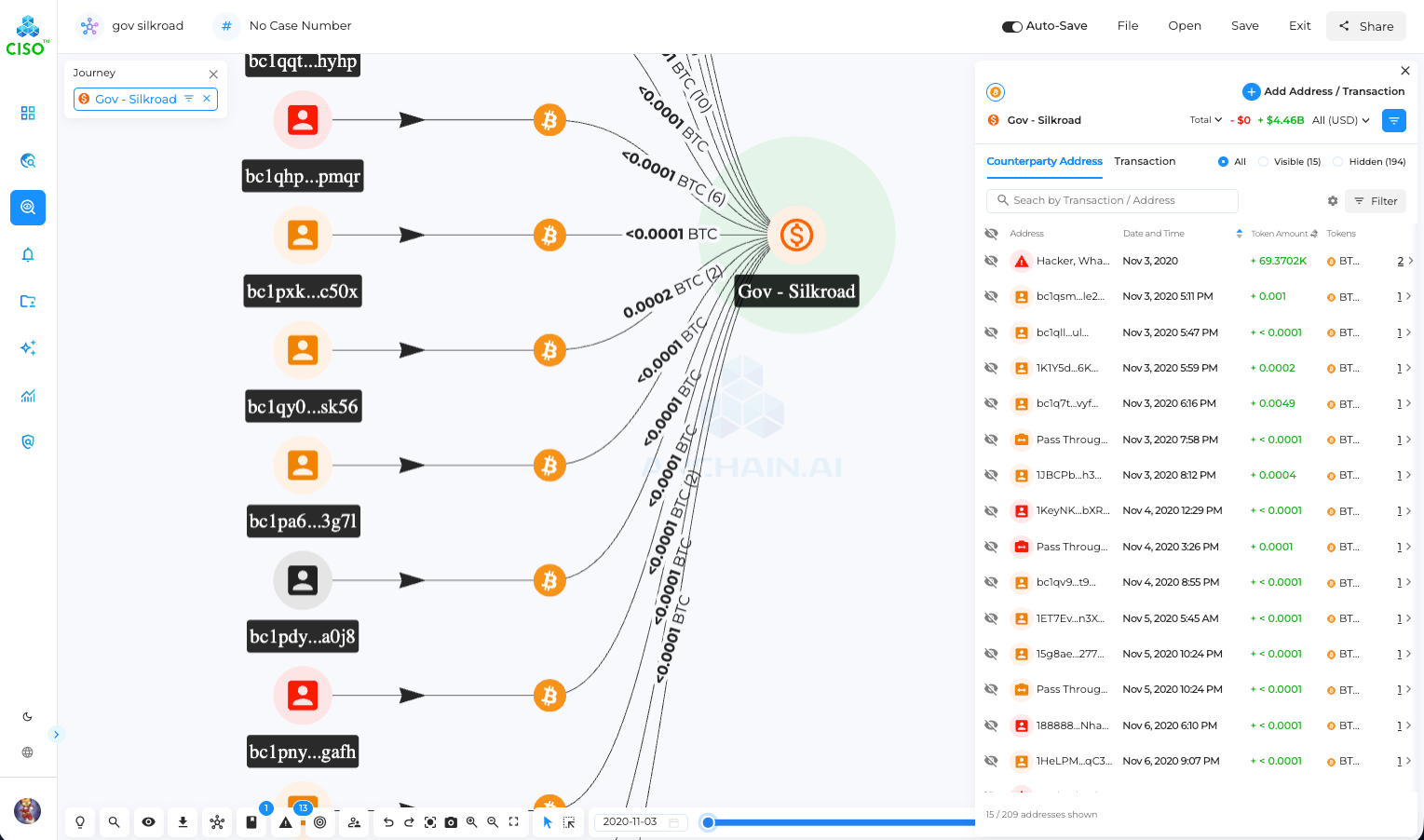
View the US Government custody Silkroad wallet graph : https://ciso.anchainai.com/s/5JEUdRcrLyk
The Ninth Circuit later rejected claimants who could not produce evidence connecting their alleged ownership to the seized coins. Source: Ninth Circuit
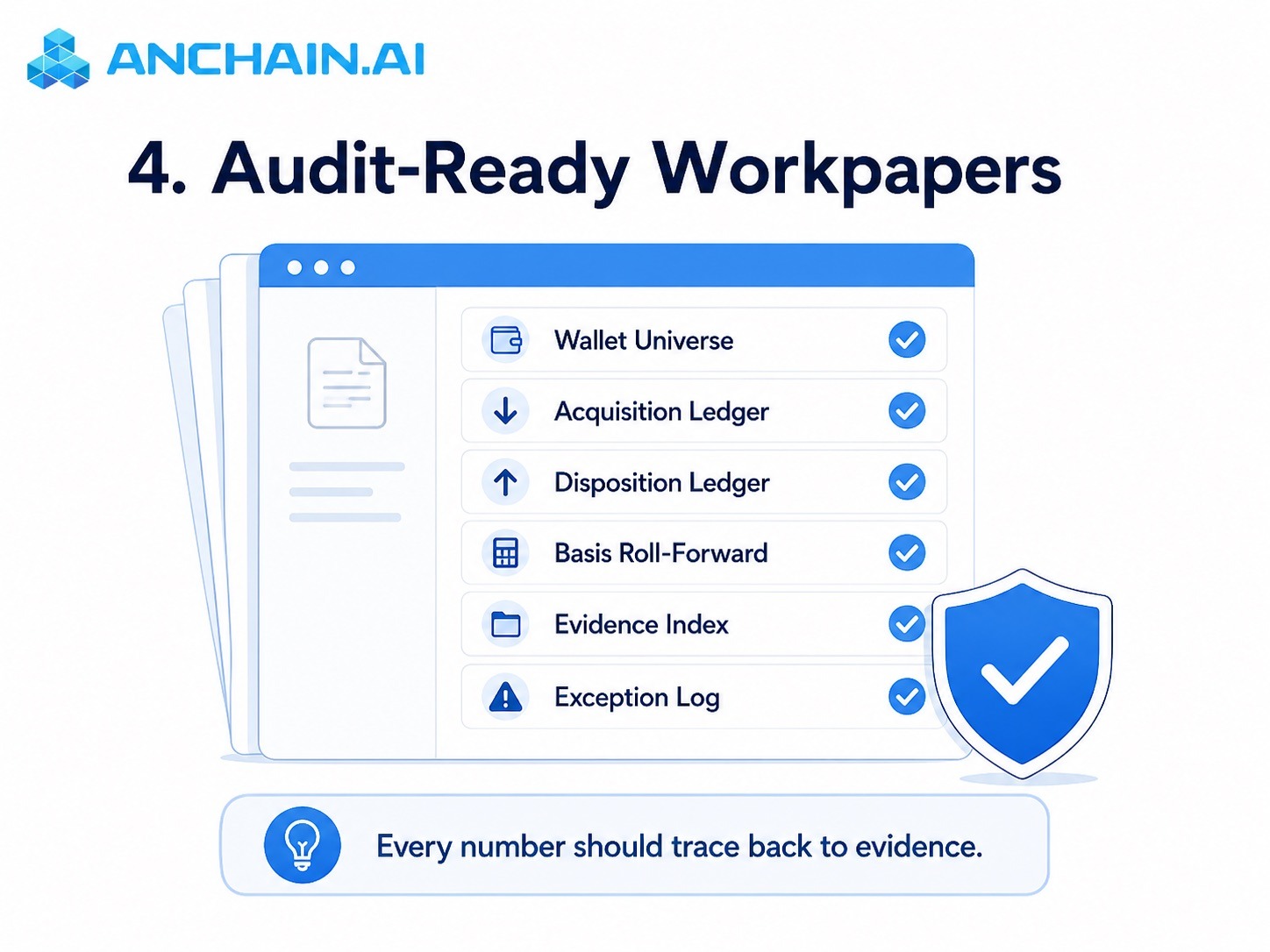
The tax lesson is direct: a wallet balance alone does not prove ownership, basis, or lawful source. An audit-ready file should map every material conclusion to a transaction hash, exchange order, bank entry, KYC record, signed-message proof, or other source document.
In Wilkerson v. Martin, subpoenaed records allegedly showed that funds were wired to a cryptocurrency exchange and the resulting wallets were emptied. A sanctions motion sought $383,236.75 in actual damages. Wilkerson died on February 8, 2023; the appellate court later reversed the default judgment on procedural grounds. The opinion identifies no blockchain, address, asset, quantity, or transaction hash. Source: Illinois Appellate Court
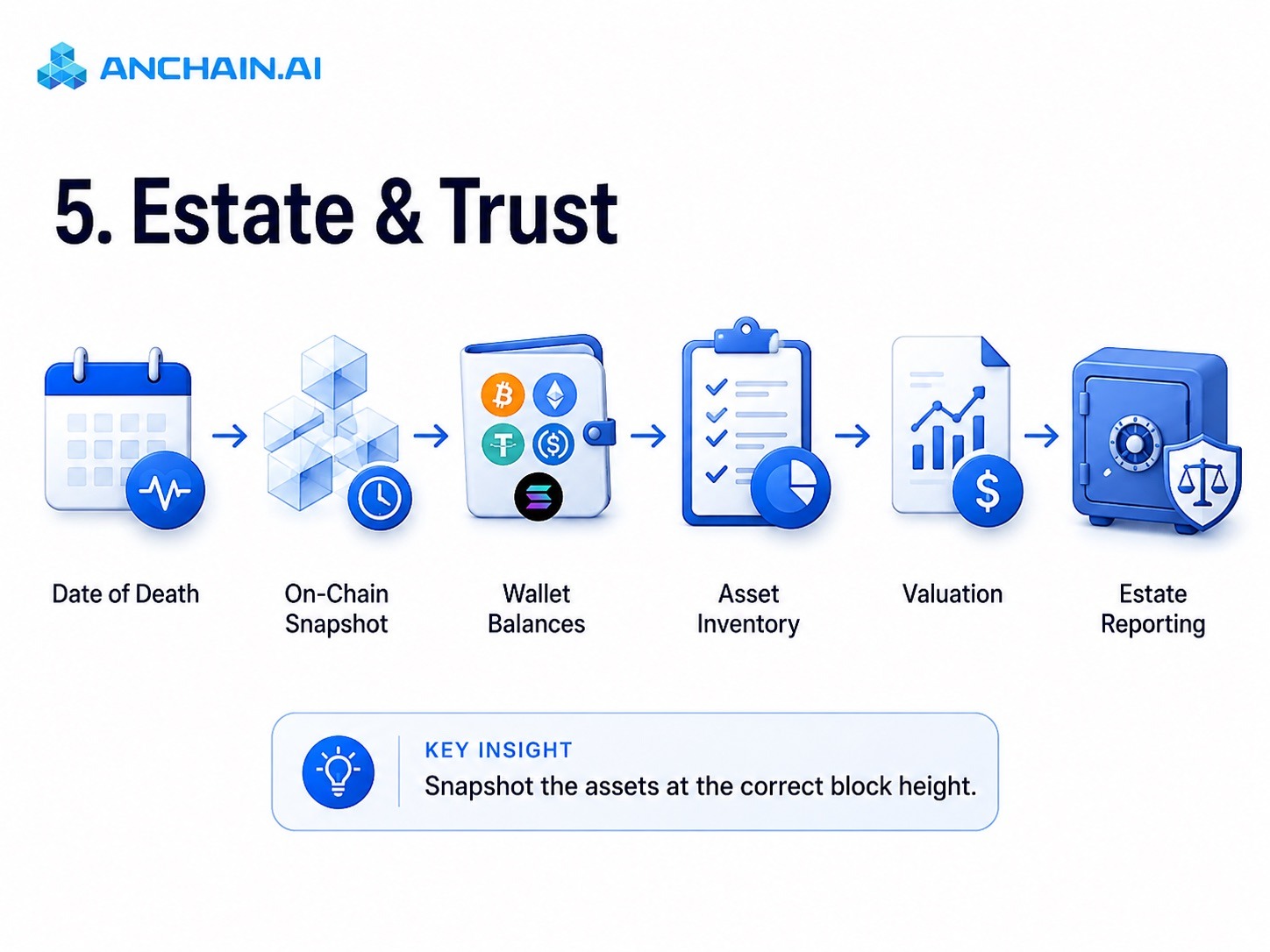
That omission defines the forensic task. A defensible estate inventory maps:
Date and time of death → block height → controlled wallets and accounts → asset quantities → historical USD valuation → estate schedule
It should also identify DeFi, staking, custody, access status, and post-death movement. An explorer screenshot captured weeks later is not a date-of-death snapshot.
For more interesting crypto tracing legal cases in probate, estate and wealth management, refer to our past case study.
Professional crypto tax forensics follows four core disciplines:
AnChain.AI supports this evidence layer through multi-hop tracing, wallet analysis, entity attribution, smart-contract decoding, and investigator-reviewed AutoReport narratives.
In a published Big Four engagement involving fragmented Bitcoin records, AnChain.AI reconstructed more than 80% of the transaction chain and completed the analysis up to 500% faster than manual tracing. Read the case study.
AnChain.AI helps tax professionals, forensic accountants, attorneys, and asset owners reconstruct transaction histories, trace digital assets, analyze DeFi activity, and produce defensible, evidence-linked reports.
Schedule a Crypto Forensics Consultation
Disclaimer: This article is for educational purposes and does not constitute tax or legal advice. Tax treatment depends on the taxpayer’s facts, jurisdiction, tax year, and applicable law.
© 2026 AnChain.AI. All Rights Reserved | Privacy Policy