© 2026 AnChain.AI. All Rights Reserved | Privacy Policy


The U.S. cryptocurrency industry may have just crossed one of its most important regulatory milestones in years.
Last week on May 14, 2026, the Senate Banking Committee voted 15–9 to advance the Digital Asset Market Clarity Act of 2025 (“CLARITY Act”), moving the legislation to the full Senate floor in what many lawmakers described as a historic bipartisan step toward establishing formal crypto market structure regulation in the United States. (source)
According to Senate Banking Committee Chairman Tim Scott:
“This legislation brings digital assets into the sunlight with clear rules, stronger safeguards, and better tools to stop bad actors.”
Chairman Scott also stated the legislation aims to “establish clear rules of the road for digital assets” and help position America as “the crypto capital of the world.”
The bill passed with support from all Republican committee members and two Democrats, signaling growing bipartisan recognition that the digital asset industry can no longer operate in regulatory uncertainty. (reuters.com)
At its core, the CLARITY Act attempts to answer one of crypto’s biggest unresolved questions:
Who regulates digital assets in the United States?
The CLARITY Act is the culmination of years of regulatory uncertainty across the U.S. crypto industry. For more than a decade, digital asset companies operated under overlapping interpretations from the SEC, CFTC, FinCEN, and state regulators, often relying on enforcement actions instead of clear market structure rules. The collapse of major crypto firms during the 2022–2023 cycle intensified pressure from policymakers and institutions to establish formal regulatory frameworks for digital assets.
At the same time, Wall Street’s growing interest in stablecoins, tokenized Treasuries, and RWAs shifted crypto from a speculative niche into an emerging financial infrastructure layer.
The CLARITY Act reflects that evolution. The conversation is no longer simply whether crypto should exist — but how blockchain-based financial systems can operate safely, compliantly, and institutionally at scale.
One of the largest trends in crypto today is the rapid growth of RWA.
Treasuries, private credit, real estate, and yield-bearing financial products are increasingly moving on-chain to improve settlement efficiency, transparency, programmability, and global accessibility. According to RWA.xyz, the ecosystem now represents approximately $26.7B in distributed RWA value and roughly $345B in represented asset value, with tokenized U.S. Treasuries alone surpassing approximately $10B.
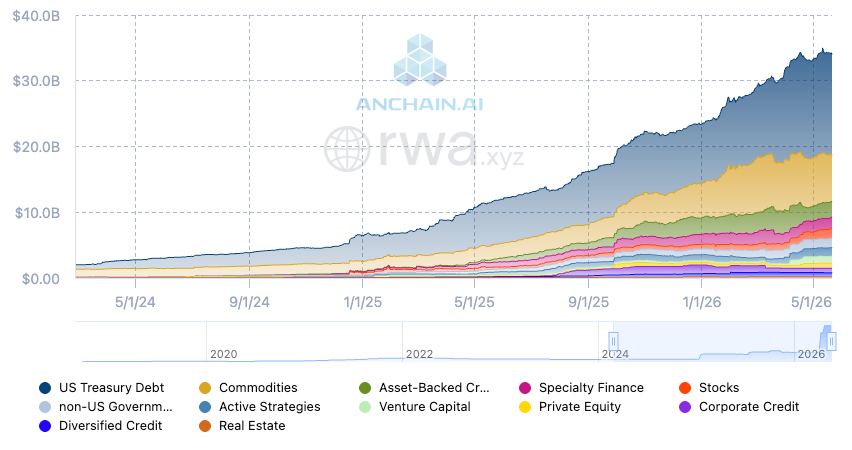
With the RWA,
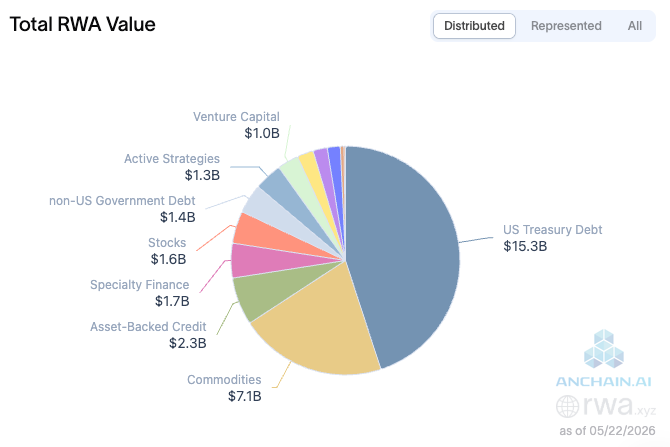
🇺🇸 Tokenized U.S. Treasuries lead the RWA market at approximately $15.3B, showing strong institutional demand for on-chain yield products.
🪙 Commodities (~$7.1B) and asset-backed credit (~$2.3B) are emerging as major tokenized asset classes.
But tokenization alone does not eliminate regulatory obligations.
In fact, as institutional assets move onto public blockchain infrastructure, the need for AML monitoring, sanctions screening, wallet risk intelligence, transaction tracing, smart contract analysis, and auditability becomes even more important.
One example is our client NUVA, the institutional-grade RWA marketplace co-created by Animoca Brands and Nuva Labs. NUVA aims to bridge traditional finance and DeFi while bringing more than $23B in Provenance Blockchain RWA TVL into broader blockchain ecosystems.
As the CLARITY Act advances, compliance infrastructure may become one of the most strategically important layers in the digital asset ecosystem.
The next generation of crypto platforms operates in an environment that is global, cross-chain, real-time, programmable, and increasingly regulated. Traditional compliance workflows were never designed for blockchain systems where transactions settle globally within seconds and interact dynamically across DeFi protocols.
This is precisely why Senate Banking Committee Chairman Tim Scott emphasized that the CLARITY Act would provide “better tools to stop bad actors.” As institutional assets move on-chain, regulators and enterprises increasingly recognize that blockchain transparency alone is not enough. Without scalable AML monitoring, sanctions screening, wallet intelligence, transaction tracing, and smart contract analysis, bad actors can still exploit the speed and complexity of decentralized systems.
AnChain.AI helps governments, financial institutions, exchanges, fintechs, and RWA platforms simplify crypto AML compliance and investigations through AI-powered blockchain intelligence. The company supports real-time transaction monitoring, wallet risk scoring, smart contract forensics, cross-chain tracing, and AI-assisted investigation workflows designed for modern blockchain finance.
Recently in the press release, AnChain.AI partnered with NUVA, the institutional-grade RWA marketplace co-created by Animoca Brands and Nuva Labs, to provide blockchain security, AML monitoring, forensic tracing, and compliance intelligence for tokenized asset infrastructure.
The broader direction is becoming increasingly clear: Washington is moving toward formal digital asset regulation, while Wall Street is moving toward tokenization. The CLARITY Act may provide the legal framework, and RWAs provide the market demand — but scalable AI-powered compliance infrastructure may ultimately become the operating system connecting the two.
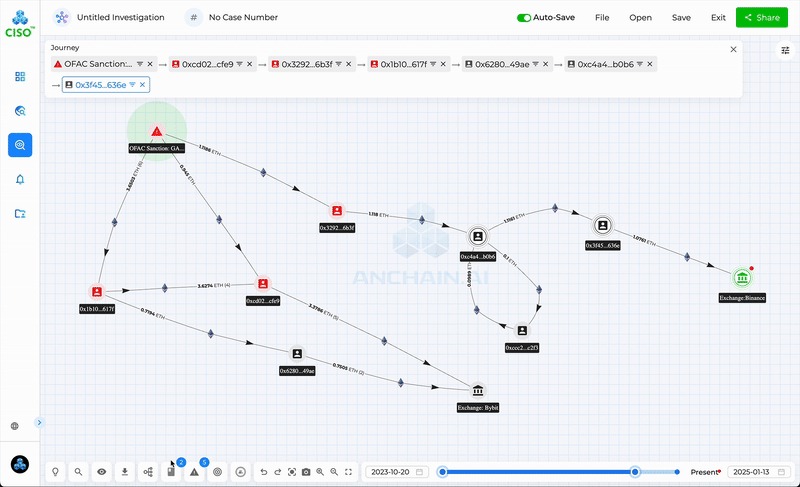
How AnChain.Ai AML workflow can streamline compliance:
Schedule a Demo
As regulatory expectations evolve, financial institutions, fintechs, exchanges, and RWA platforms need scalable compliance infrastructure built for the realities of blockchain finance.
Schedule a call with the AnChain.AI team to learn how Agentic AI can help streamline AML compliance and save cost:
This article is for informational purposes only and does not constitute legal, financial, investment, or compliance advice. Digital assets, blockchain technology, and tokenized RWAs involve regulatory and financial risks. Readers should conduct independent research and consult qualified professionals before making decisions. Use at your own risk.
© 2026 AnChain.AI. All Rights Reserved | Privacy Policy