© 2026 AnChain.AI. All Rights Reserved | Privacy Policy


AnChain.AI - Jan 2025
In 2025, crypto fraud crossed a critical threshold. It stopped being opportunistic and became systematic, automated, and AI-orchestrated.
At AnChain.ai, we analyzed the top AI-driven crypto fraud incidents of 2025—cases where artificial intelligence was not incidental, but central to how the crime was planned, executed, and scaled.
The result is our 2025 AI Risk Report, and the findings are sobering.

Across just 10 major AI-enabled crypto fraud cases, more than $2 billion was stolen.
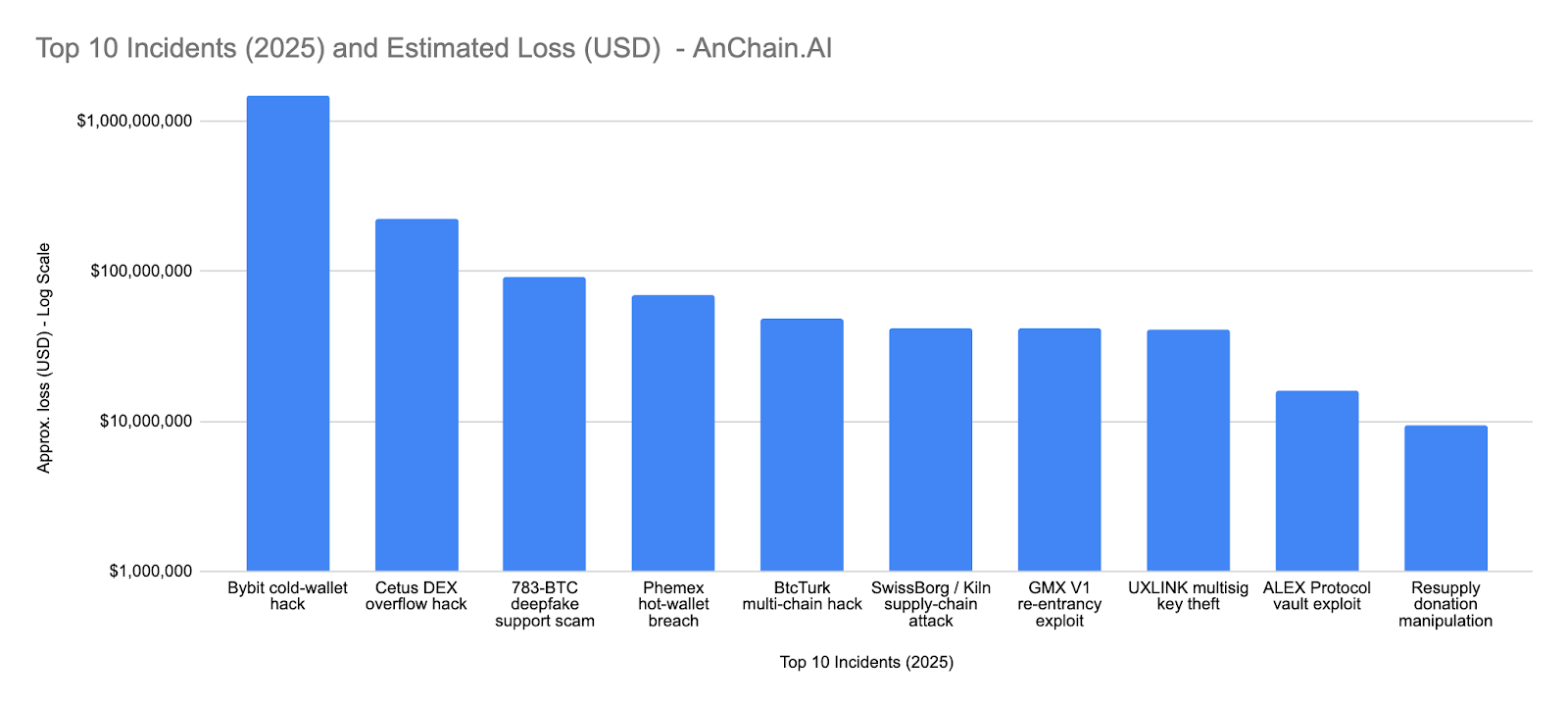
These include:
These are only a subset of 2025 incidents, but they clearly expose how AI is reshaping financial crime.
What matters more than the individual hacks is the pattern behind them:
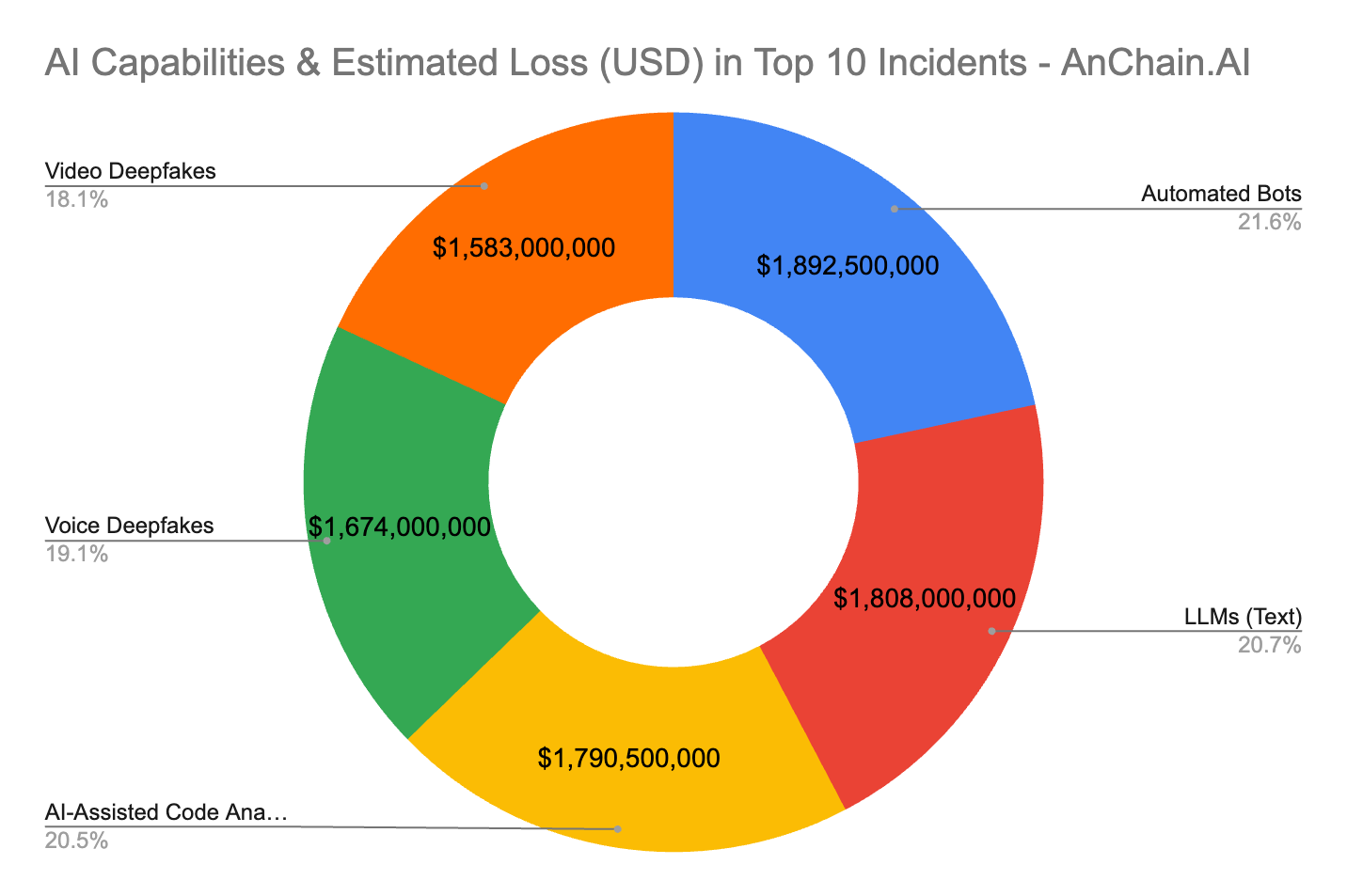
These numbers overlap because modern attacks are AI-stacked—language, identity, code, and automation operating together as a single fraud system.
The most damaging incidents of 2025 shared a common architecture:
LLMs generate the narrative → Voice/video AI establishes authority → Automated tools exploit logic → Bots execute and launder funds at machine speed.
This is no longer “fraud with AI tools.” It is AI as the operating system of financial crime.
AI-driven fraud doesn’t just exploit vulnerabilities—it exploits latency:
As long as attackers operate autonomously and defenders operate manually, the gap will keep widening.
Our conclusion is straightforward:
When fraud operates at machine speed, defense must do the same.
Protecting crypto and fintech ecosystems now requires super-intelligent systems—platforms that can reason, correlate, and act across chains, identities, and behaviors in real time, while remaining explainable for regulators and law enforcement.
The AnChain.ai 2025 AI Risk Report includes:
👉 Download the full report: https://www.anchain.ai/2025-risk-report
© 2026 AnChain.AI. All Rights Reserved | Privacy Policy